


In modern food processing plants, central kitchens or fresh food logistics centers, turnover box cleaning machines have become the core defense line for ensuring the hygiene and safety of the supply chain. However, many enterprises have a common cognitive misunderstanding: they regard this expensive automated equipment as an investment that they can rest easy once the start button is pressed. In fact, a basket washing machine that lacks scientific maintenance will rapidly lose its cleaning effect and may even transform from a “cleaning guard” to a “source of pollution”, leading to a double loss of control over food safety risks and operating costs. This article aims to provide a professional-level maintenance and care guide for basket washing machines, systematizing and scheduling the complex maintenance work to help enterprises truly extend the service life of equipment and ensure the absolute cleanliness of every turnover box.
Washing area filter screen: This is the first line of defense to intercept large debris such as vegetable leaves, meat scraps, and plastic fragments. It must be cleaned at the end of each shift or at least once a day to prevent water pump idling, insufficient water pressure and circulating water pollution caused by blockage.
Nozzles: Check whether all the nozzles on the spray arms are clogged or have abnormal water column shapes (they should be uniform fan-shaped). A clogged nozzle can cause blind spots in cleaning.
Water level and water quality in the water tank: Visually inspect whether the water levels in the clear water tank and the recycling water tank are normal, and observe whether there is any abnormal oil or foam accumulation on the surface of the recycling water tank.
Establish a simple operation log to record the operation duration, water temperature, abnormal sounds or alarm codes of each shift. This log is valuable data for predicting faults.
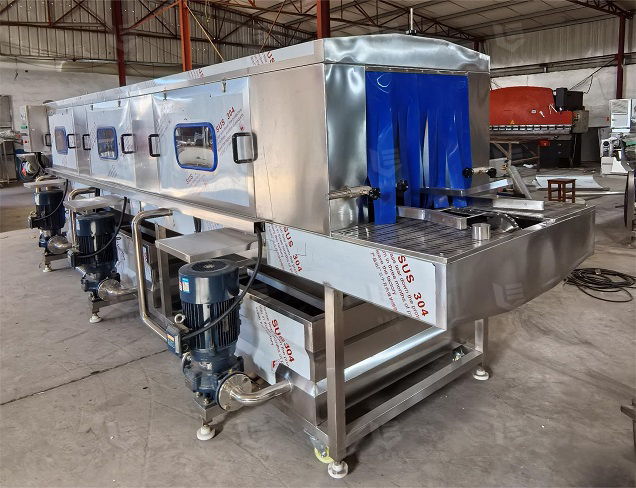
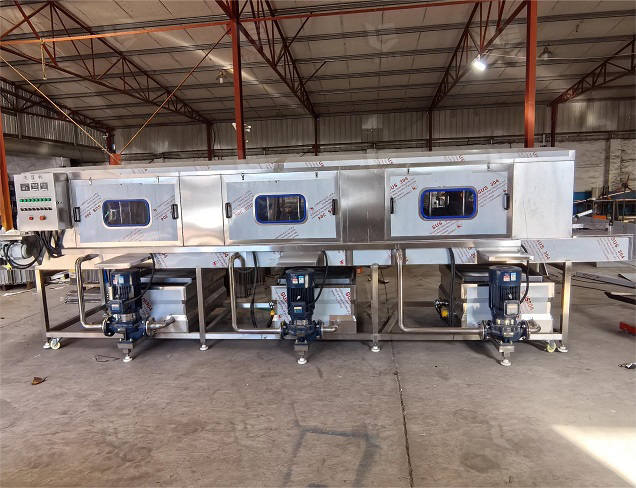
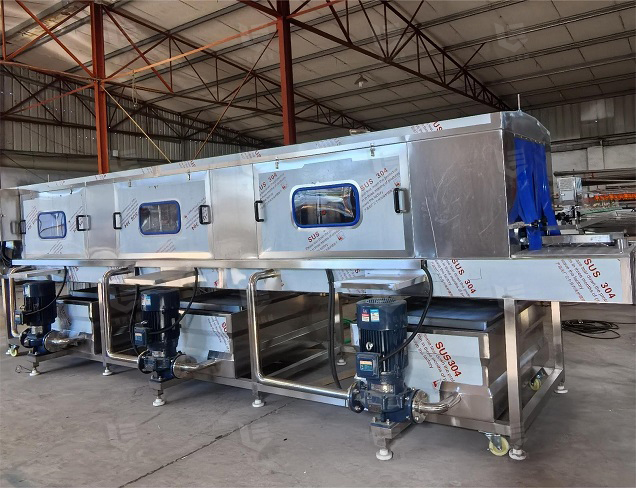
A deep cleaning of the waterway system should be carried out once a week. The key point is to empty and scrub the inner walls of all water tanks, especially the recycled water tanks that are prone to bacterial growth. In addition, food-grade descaling agents should be used to remove scale from the heating tubes and waterways, as scale will wrap around the heating tubes like a “cotton-padded jacket”, causing a sharp increase in energy consumption and a sudden drop in heating efficiency.
When entering the monthly maintenance cycle, the focus should shift to the mechanical transmission and sealing system. Check the tension of the chain or conveyor belt and replenish the special lubricating oil. At the same time, carefully inspect the hatch door sealing strips and the observation window rubber strips to ensure they are soft, elastic and undamaged. Poor sealing can lead to heat loss and steam leakage. This is also a good time to verify the accuracy of the temperature sensors in each temperature zone.
Every six months, a performance test of the core functional components needs to be conducted. This includes using a pressure gauge to check whether the output pressure of the main water pump can still reach the rated standard (for example, 3-5 bar). Insufficient pressure directly indicates a decrease in cleaning power. Similarly, it is necessary to test the air volume and air temperature of the drying fan to ensure that it can dry the box quickly and thoroughly and prevent the growth of bacteria in a humid environment.
Every year, equipment suppliers or professional engineers should be invited to conduct a comprehensive maintenance and calibration, giving the equipment a systematic “physical examination” to restore its performance to a state close to that at the factory.
1.Decreased cleaning effect: There are stains or water stains remaining on the basket body after cleaning.
The primary inspection sequence: 1) Nozzle blockage; 2) Insufficient water temperature (scaling on the heating tube or heater malfunction); 3) Whether the cleaning agent pump is working properly and whether the concentration is appropriate.
2.Abnormal noise or vibration: usually from water pumps (possibly cavitation or impeller damage), fans (bearing wear), or transmission mechanisms (loose chains, foreign objects stuck in).
3.Frequent alarm shutdowns: Record and review the meanings of the alarm codes in the manual. Common causes include water level sensor failure, temperature over-limit, abnormal door opening and closing, etc.
In the industrial field, “mean time between failures” is the golden indicator for measuring the reliability of equipment. The investment in the basket washing machine and the purchase price are just the beginning. The scientific maintenance throughout its entire life cycle is the decisive factor in determining its total cost of ownership and food safety value.
A failed cleaning due to poor maintenance may lead to contamination of the entire batch of products, loss of orders, and even the collapse of the brand’s reputation. Therefore, elevating the maintenance and upkeep of basket washing machines from “passive repair” to the strategic level of “active prevention” is not only technical management but also a manifestation of risk management and quality culture in modern food and logistics enterprises. When every turnover box can stand the most rigorous hygiene inspection, this seemingly cumbersome maintenance work has already transformed into the most solid competitiveness of the enterprise.