


In the process of choosing a commercial steamed bun machine, price is undoubtedly the most sensitive and explicit factor for business owners, but it is often also the most misleading decision-making trap. A low-priced device, if it performs poorly in terms of production efficiency, finished product qualification rate and long-term operating costs, the final comprehensive cost may far exceed that of a high-quality device with an initial higher price.
A truly wise choice should be based on a profound understanding of the core technical parameters of the equipment. These three parameters directly determine the production efficiency, product quality and long-term economy of the steamed bun machine, and they are the decision-making cornerstones that should be given more priority than price.
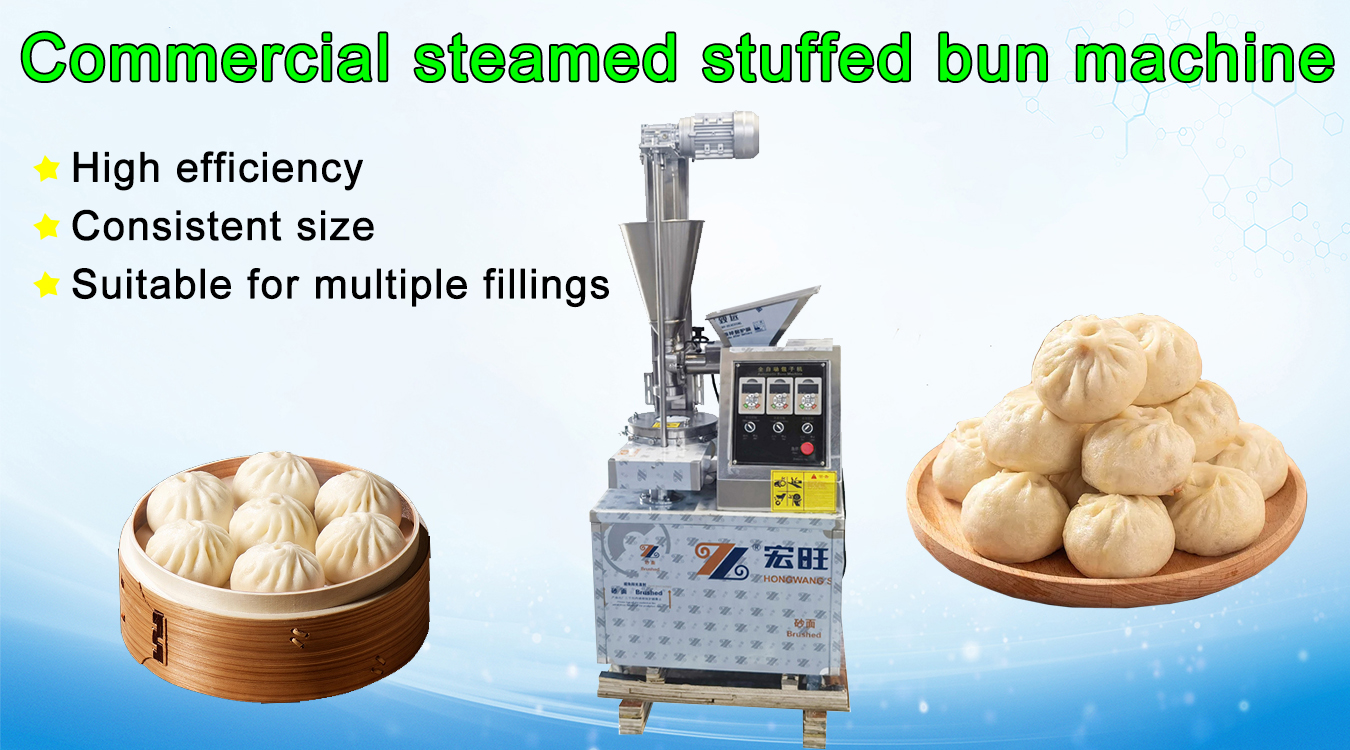
Core parameter one: Production capacity
1.Theoretical maximum speed and effective stable speed:
The “3,600 per hour” often promoted by manufacturers is usually the theoretical maximum speed, which is the limit value under ideal filling conditions without considering any pauses.
Under the actual conditions of the hardness of the dough and filling you use (such as old dough, fermented dough) and the particle size of the filling (such as containing large pieces of meat and vegetables), what is the stable continuous production speed that the equipment can maintain? A device that claims to operate at 3,600 per hour but can only stably run at 2,800 per hour is far less valuable than one that claims to operate at 3,000 per hour but can stably run at 2,900 per hour.
2. Switching and preparation time:
How long does it take to change the weight of the buns (such as from 60 grams per bun to 100 grams per bun) or the type of filling? How many components are involved in the replacement and cleaning? This directly determines the flexibility of the equipment in responding to market demands. Equipment with excellent modular design may only require changing the mold and adjusting a few parameters, and the switch can be completed within 10 minutes.
Core parameter Two: Finished product qualification rate
1. Qualified multi-dimensional definition
Appearance consistency: The number of pleats, the clarity of patterns, and whether the top finishing is clean. This is related to the brand’s professional image.
Weight accuracy: Control accuracy of the weight of the dough sheet, filling, and total weight (such as ±2 grams). This directly determines the accuracy of your raw material cost control and product pricing.
Structural integrity: Whether there is any exposed filling, broken skin, or the bottom is too thick or too thin. This affects the steaming process and the final taste.
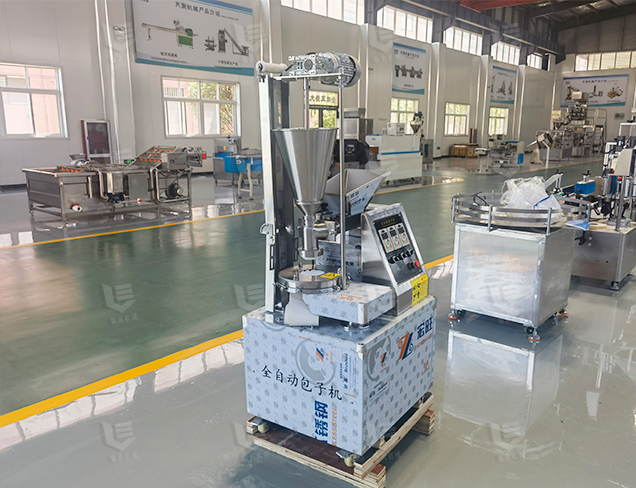
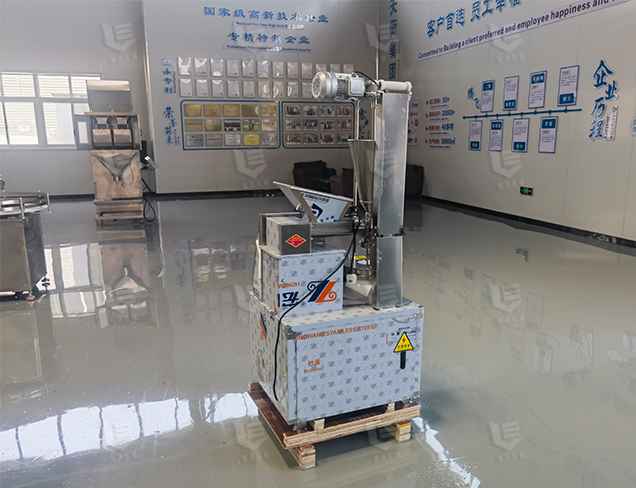
2. Dynamic stability of the pass rate
Is there a significant change in the qualified rate of the finished products of the equipment 10 minutes before startup, 1 hour after operation, and 3 hours after operation? After running for a period of time, many devices will experience a decline in accuracy due to mechanical clearance and temperature changes.
3. Relationship between Core Components and Pass Rate:
Flour and filling feeding system: Is it independently driven by a servo motor? The servo system can achieve precise synchronization and weight control of dough and filling, serving as the electrical foundation for ensuring a high pass rate (typically over 98%). The traditional gear or mechanical adjustment methods are far less precise and stable.
The forming device: Its material (special alloys are superior to ordinary steel), processing accuracy, and whether it is easy to disassemble and clean determine the final effect and long-term consistency of steamed bun forming.
Core Parameter Three: Configuration and reliability of key components
1. Power and Control System:
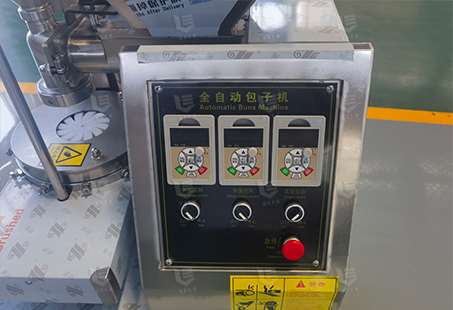
Core motor: Is the main drive motor an AC variable frequency motor or a common motor? The former offers smoother speed regulation, has less impact on the power grid, and is more energy-efficient and durable. Are the motors for feeding noodles and fillings the aforementioned servo motors? This is the core mark that distinguishes mid-to-high-end from low-end equipment.
Control system: PLC (Programmable Logic Controller) or ordinary single-chip microcomputer? The stability and anti-interference ability of the PLC system are far superior to those of the latter, and its fault diagnosis is more accurate, which is the guarantee for continuous and stable operation.
2. Core mechanical structure:
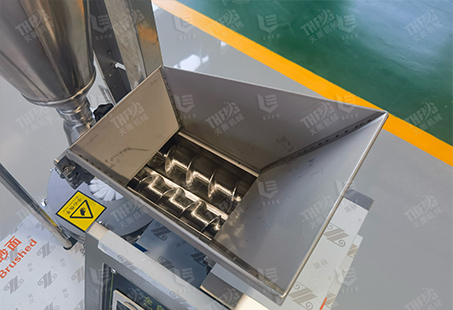
Core component material: Are the components that come into direct contact with the dough and filling (such as the screw conveyor, forming plate, and filling tube) made of food-grade 304 or higher grade stainless steel? What is the surface finish like? This concerns food safety, wear resistance and the difficulty of cleaning.
Bearings and seals: Do the bearings located at key positions such as the dough hopper and filling hopper have waterproof and dustproof designs? What is the material of the seal? These details directly determine whether the equipment can operate for a long time without getting stuck or leaking in a damp and dusty kitchen environment.
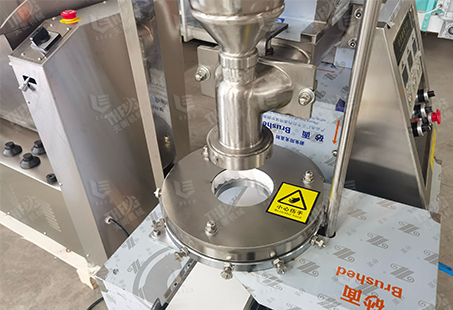
3. Maintainability design
How many components need to be disassembled for daily cleaning? Is the tool universal? Are the key lubrication points easily accessible? An excellent design should allow the main cleaning work to be completed by one person within 15 to 30 minutes.
Recommended products:
Commercial steamed stuffed bun machine
Industrial steamed bun making machine
Choosing a commercial steamed bun machine is an investment in creating value for the equipment in the coming years or even a decade. Price is a one-time expense at present, while the three core technical parameters of production capacity, pass rate and reliability jointly define every penny of labor saved, every gram of waste avoided, every order guaranteed by the equipment throughout its life cycle, as well as the brand reputation brought about thereby. Understanding the parameters means understanding the future of the business.
Material of contact parts: It must be food-grade stainless steel. Check the material certificates of all parts that come into contact with the materials, such as the chopping and mixing pot, knife assembly, and cover.
Safety devices: Check if there are interlock safety devices. If the pot body is not in place or the lid is not tightly closed, the machine cannot start. This is a basic guarantee for protecting the safety of the operator.